The Easiest Business to Start With AI Right Now

No clients to chase. No calls to take. No experience required.
Hey,
If someone asked me today — "What's the single easiest business someone could start with AI, from scratch, with no technical skills and no existing audience?" — I wouldn't hesitate.
Selling digital products.
Not because it's the most glamorous. Not because it makes you rich overnight. But because it has something no other business model can match:
You build it once. You sell it forever.
No client calls. No trading time for money. No chasing invoices. You create something valuable, put it online, and every sale after that happens while you're doing something else entirely.
Here's the complete picture.
What a Digital Product Actually Is
A digital product is any file a person downloads and uses — a PDF guide, a template pack, a checklist, a short email course, a swipe file, a Notion dashboard, a mini-course.
It costs nothing to produce beyond your time. It costs nothing to deliver — the platform does it automatically. It has no inventory, no shipping, no overhead.
You make it once. The file exists forever. Every person who buys it receives the exact same thing with zero additional effort from you.
That's the model. Simple, clean, and genuinely passive once it's built.
Why AI Makes This the Easiest Business Available Right Now
Before AI, creating a digital product was a significant undertaking. Writing a comprehensive guide took weeks. Designing it professionally required either expensive software or an outsourced designer. Building a sales page meant either hiring a copywriter or spending days learning how to write one yourself.
Most people never got past the thinking-about-it stage.
AI has collapsed every single one of those barriers.
The writing: ChatGPT produces a complete first draft of your product in under an hour. You review it, add your experience and examples, and edit it into something genuinely yours.
The design: Canva has hundreds of professional PDF and workbook templates. You drop your content in, adjust the colours, and export a polished product in an afternoon.
The sales page: One AI prompt produces a conversion-focused product description in two minutes. No copywriting experience required.
The delivery: Gumroad handles the checkout, the payment, and the file delivery automatically. A buyer pays, receives the file instantly, and you never touch it.
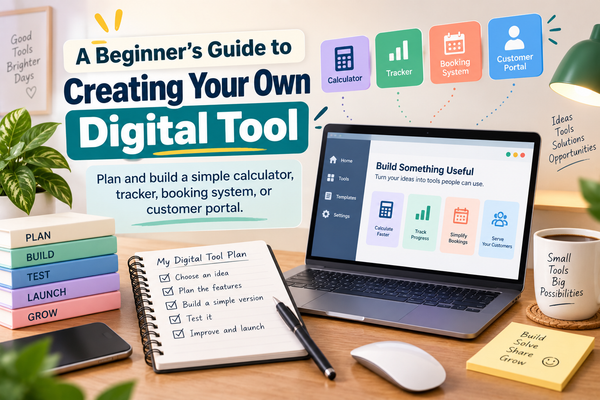
The entire thing — from blank page to live, purchasable product — is a weekend of focused work.
The Exact Weekend Build Plan
Saturday Morning — Find Your Topic (1 hour)
Open ChatGPT. Type this:
"I have knowledge and experience in [your background]. What are the five most specific, solvable problems faced by [the type of person you want to help]? For each problem, suggest a digital product title and a one-sentence description of what it would contain."
Read through the five ideas. Pick the one that feels most true to what you actually know — not the most impressive, the most honest.
Then ask:
"Create a complete outline for [your chosen product]. Include an introduction, five to seven sections each with three key teaching points, a practical exercise per section, and a conclusion with a clear next step."
You now have your product brief.
Saturday Afternoon — Write It (2 hours)
Work through each section of the outline. For every section, prompt ChatGPT:
"Write the content for [section title]. Explain it clearly for a complete beginner. Use simple language, include a real-world example, and end with one specific action the reader can take immediately."
Copy each section into a single document as you go.
When the full draft is complete — read it from start to finish. Anywhere it sounds generic, rewrite it. Anywhere your personal experience is relevant, add it. The AI gives you the structure and the starting point. Your knowledge and your voice make it worth paying for.
Saturday Evening — Design It (90 minutes)
Go to canva.com. Search "PDF guide" or "workbook." Choose a clean, professional template — the simpler the better.
Replace every piece of placeholder text with your content. One section per page. Keep it uncluttered. Add your name on the cover. Export as PDF.
Your product now looks like it was designed by a professional — because the template was.
Sunday Morning — Put It on Sale (1 hour)
Go to gumroad.com. Create a free account. Click New Product. Upload your PDF.
Write your product description using this prompt:
"Write a product description for a digital product called [title]. It helps [your audience] solve [specific problem] and achieve [specific result]. Open with the problem so the reader feels understood. Introduce the product as the solution. List five outcome-focused benefits. Close with a single clear call to action. Under 200 words."
Edit it. Add your voice. Paste it in.
Set your price. For a first product, £17–£47 is the sweet spot — low enough for an easy yes, high enough to be taken seriously.
Upload a cover image (make it in Canva in ten minutes — "Instagram Post" template size works perfectly).
Click Publish.
Your product is live. Anyone in the world can find it, buy it, and receive it automatically — right now, while you sleep, while you're at work, while you're doing anything else entirely.
Sunday Afternoon — Tell People About It (30 minutes)
Write one post on your primary social platform announcing the product. Use this prompt:
"Write a social media post announcing [product name]. Open with the specific problem it solves. Describe the transformation the buyer experiences. Include the price and a clear call to action. Honest, warm, and specific. Under 150 words."
Edit it. Post it. Add the Gumroad link to your bio.
Then send ten personal messages to people in your network who face the problem your product solves. Not a broadcast — ten individual messages.
"Hey [name] — I just finished something I think could genuinely help you. It's [one sentence]. Here's the link if you'd like to take a look: [link]."
That's your launch. Simple, personal, and more effective than any ad campaign at this stage.
Why This Model Works Even With No Audience
The most common objection I hear is this: "But I don't have a following. Nobody knows who I am."
Here's the honest answer.
Your first sales will almost certainly come from people who already know you — your network, your former colleagues, people in your life who face the problem your product solves.
You don't need ten thousand followers for your first ten sales. You need ten people who trust you and have the problem your product addresses.
And you almost certainly know ten of those people right now.
The audience comes later — through consistent content, through word of mouth from happy buyers, through the compound effect of showing up and posting about the problem your product solves every single day.
But the first sales? They're closer than you think. They're sitting in your contacts right now.
What Makes a Digital Product Sell
Two things, and only two things.
Specificity. A product that promises to help "everyone with productivity" helps no one in particular. A product that helps newly qualified teachers manage their classroom in the first term without burning out is specific enough that the right buyer sees it and immediately thinks — that's for me.
The more precisely you describe the problem and the outcome, the more magnetic your product becomes to exactly the person who needs it.
A real outcome. Your product must genuinely deliver what it promises. Not almost. Not eventually. Clearly, practically, and in a timeframe the buyer can see.
Products that deliver real outcomes generate testimonials. Testimonials generate the next wave of sales. That cycle — deliver well, collect proof, sell more — is how a digital product business compounds over time.
Get those two things right and the model takes care of itself.
The Simplest Business on the Internet
No clients to manage. No calls to schedule. No physical products to ship. No technical skills required.
Just your knowledge, packaged clearly, priced honestly, and put in front of the right people.
One weekend to build. A lifetime to sell.
That's it. That's the whole business.
The only question is what you're building this weekend.
John