How Top Companies Are Replacing Standard Workflows with Multi-Agent Systems
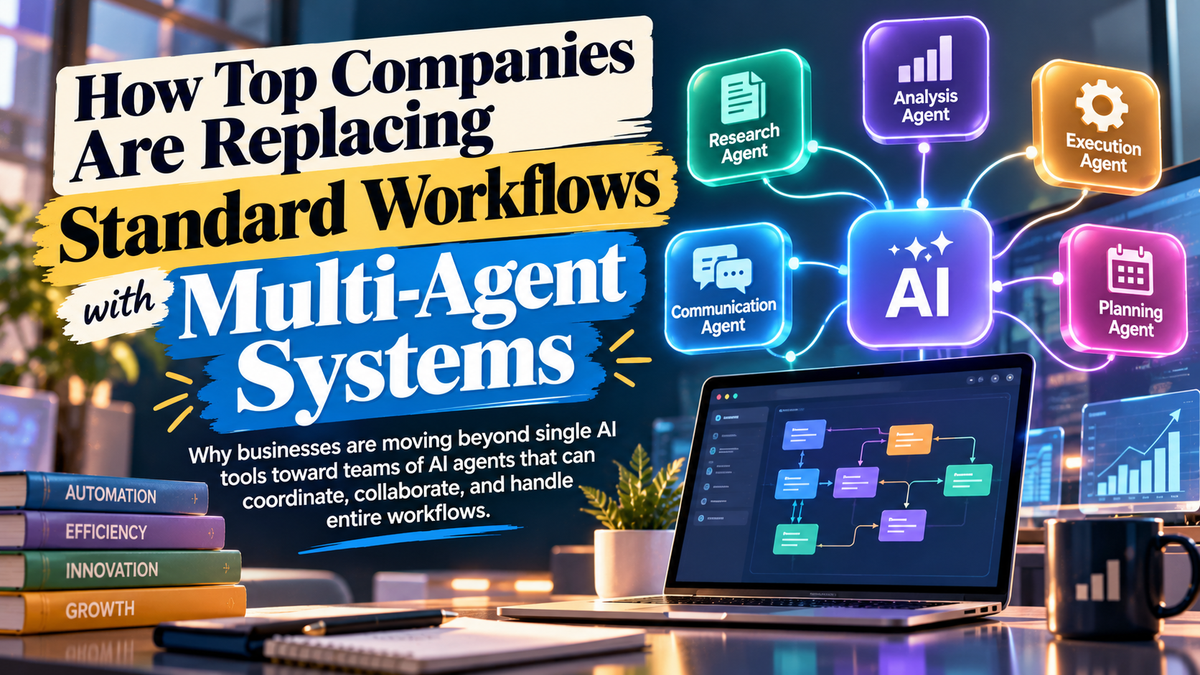
Why businesses are moving beyond single AI tools toward teams of AI agents that can coordinate, collaborate, and handle entire workflows.
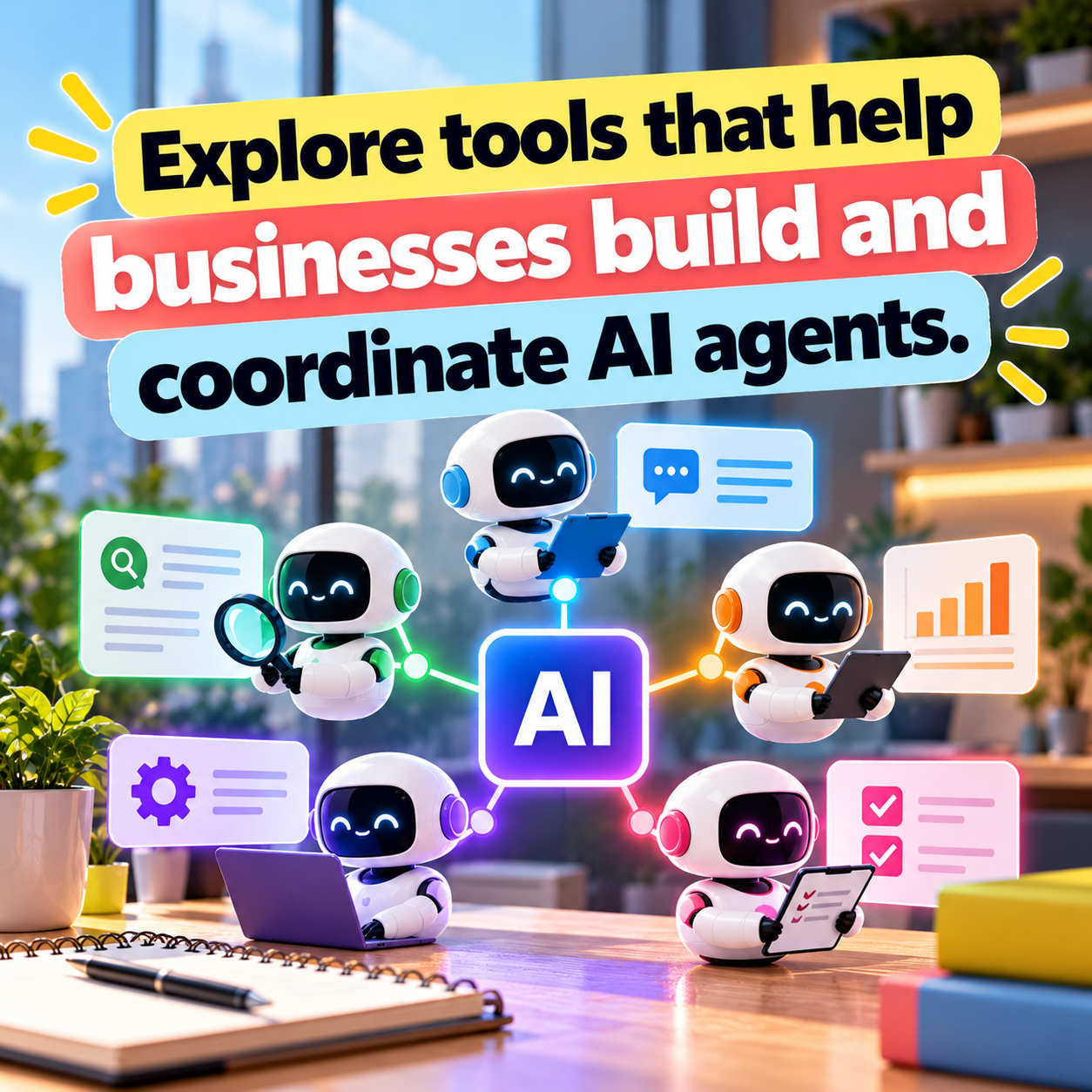
Imagine several AI agents working together: one researches, another analyzes, and another prepares the final output.
Instead of relying on separate tools and manual handoffs, businesses are exploring how AI agents can coordinate entire workflows.
The goal isn't just to make individual tasks faster. It's to rethink how work gets done.
🤖 FROM STANDARD WORKFLOWS TO MULTI-AGENT SYSTEMS
Traditional workflows follow predefined steps. Someone completes a task, passes it along, and waits for the next step.
Multi-agent systems introduce another approach.
Single AI assistant: Handles individual tasks like writing, summarizing, or research.
Traditional automation: Follows rules to complete repetitive tasks.
Multi-agent systems: Coordinate multiple AI agents to handle different parts of a larger process.
The question is no longer just "What can AI do for this task?" It's "How could multiple AI agents work together to handle the entire process?"
🧩 HOW MULTI-AGENT SYSTEMS WORK TOGETHER
Imagine a company preparing a weekly market report.
One agent gathers information. Another analyzes the findings. A third drafts the report, while another checks it for missing details.
A human reviews the final result before it reaches management.
Each agent has a specific role, reducing some of the manual coordination involved in traditional workflows.
The real opportunity is connecting individual AI capabilities into one coordinated process.
📝 HOW TO START EXPLORING MULTI-AGENT SYSTEMS
1. Identify repetitive workflows
Look for tasks involving research, analysis, writing, and review.
2. Divide the responsibilities
Determine which steps could be handled by specialized agents.
3. Choose the right approach
Some tasks need multiple agents, while others only need basic automation or one AI assistant.
4. Connect the steps
Define how agents share information and pass work between one another.
5. Keep human oversight
Review important outputs and require approval for consequential actions.
🚀 A SIMPLE WAY TO START
Choose one recurring workflow and identify where people spend the most time coordinating tasks.
Consider whether automation, a single AI assistant, or multiple agents could simplify the process. Test the results before expanding.
❯❯❯❯ Want to explore multi-agent AI? Discover resources to help you build smarter workflows.
📌 NOTE
Multi-agent systems aren't always better than traditional automation. Their effectiveness depends on the task, system design, costs, and reliability.
Start small, protect sensitive information, and keep humans involved in important decisions.
KEY TAKEAWAY ⤵
Businesses are exploring ways to move beyond isolated AI tasks toward coordinated systems.
Don't just automate the steps. Rethink how the work gets done.
- AI Business Builder