10 Ways to Use Smart Tools in Everyday Life
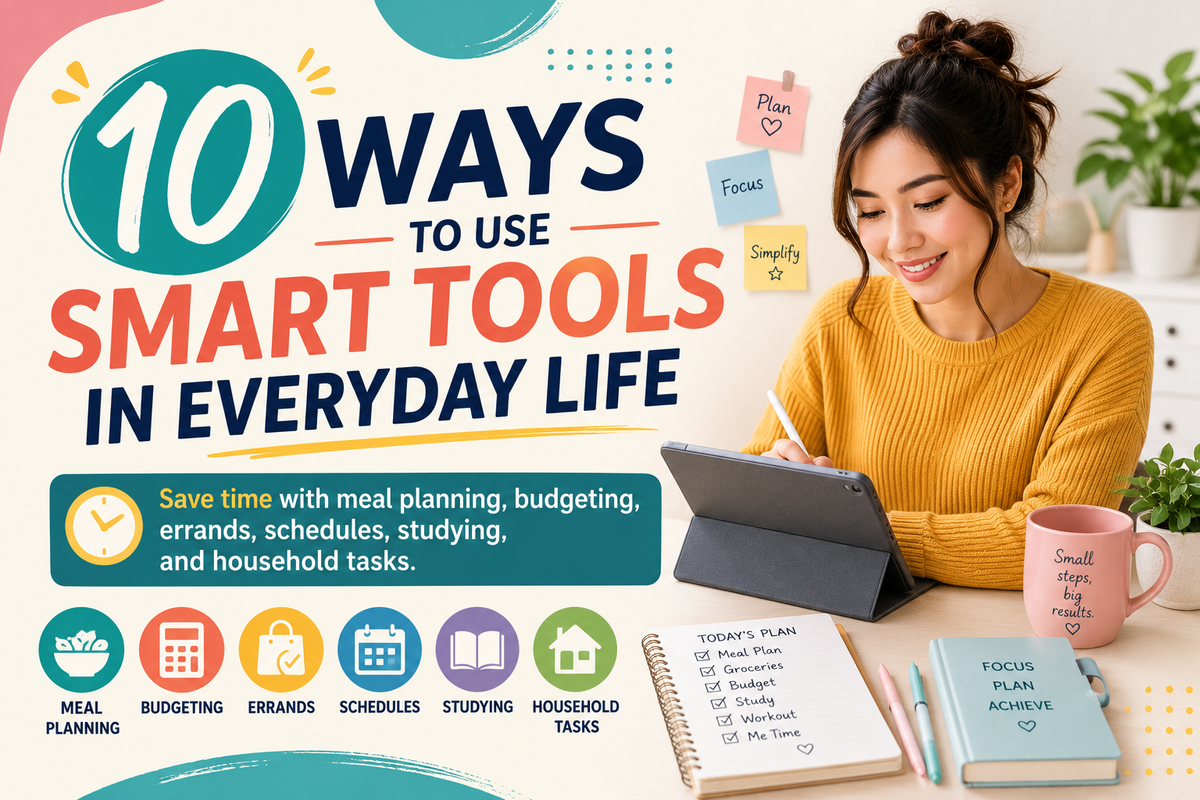
Save time with meal planning, budgeting, errands, schedules, studying, and household tasks.
Add it up sometime. The average person burns over an hour a day on small, mindless tasks - planning dinner, hunting for a receipt, retyping the same reminder.
That's more than a full waking day every single month, gone to things that barely need a human at all.
The fix isn't more willpower. It's letting smart tools quietly handle the parts of daily life that don't need your attention. Here are ten places to start.

🟢 MEAL PLANNING. Tell a tool your budget, your household size, and what's in the fridge, and get a week of meals plus a shopping list in seconds.
🟢 BUDGETING. Apps can sort your spending into categories automatically, so you see where the money goes without a single spreadsheet.
🟢 ERRANDS AND LISTS. Keep one shared shopping list that everyone in the house adds to, synced across every phone in real time.
🟢 SCHEDULES AND REMINDERS. Speak a reminder out loud once - "text Mom Friday at six" - and never carry it around in your head again.
🟢 STUDYING AND LEARNING. Turn a dense article or textbook chapter into a short summary, flashcards, or a quick quiz to test yourself.
🟢 HOUSEHOLD UPKEEP. Set recurring reminders for the things you always forget - filters, bills, the car - so they stop sneaking up on you.
🟢 EMAIL AND MESSAGES. Save your common replies as shortcuts, and let filters sort the noise before you ever open your inbox.
🟢 DOCUMENT WRANGLING. Snap a photo of any paper - a bill, a form, a handwritten note - and have it turned into clean, searchable text.
🟢 TRAVEL AND APPOINTMENTS. Compare routes, estimate travel time, and get nudged when it's actually time to leave, not a guess.
🟢 FAMILY COORDINATION. Share one calendar so everyone sees the same schedule, and nobody double-books the one free evening.
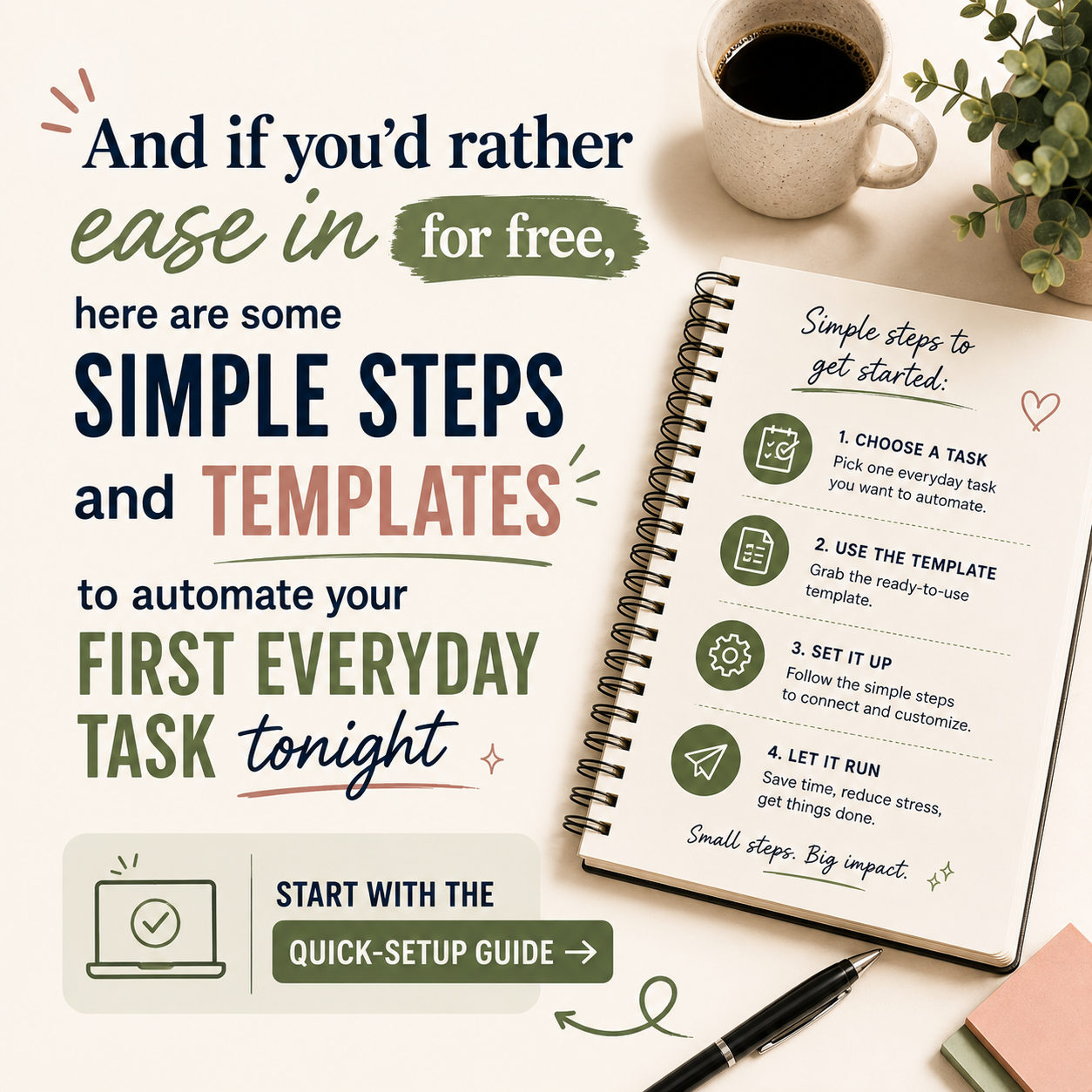
If you'd rather ease in for free, here are some simple steps and templates to automate your first everyday task tonight - start with the quick-setup guide.
DON'T TRY ALL TEN AT ONCE
Here's where most people go wrong: they get excited, try to overhaul everything in one weekend, feel overwhelmed, and quit by Tuesday.
Do the opposite. Pick the three tasks from that list that eat the most of your week and set up only those. Live with them for a few days. Once they run themselves, add one more.
There's a real reason to go slow: our brains have a limited daily budget for decisions, and small repeated choices ("what's for dinner?") drain it faster than we notice. Every tiny decision you hand off leaves more mental energy for the things that actually matter to you.
HOW ONE SETUP ACTUALLY GOES
Let's do the meal-planning one together so it feels real. Open a planning tool, or even a simple assistant, and give it three things: how many people you're feeding, your rough weekly budget, and whatever is already in the fridge.
In seconds you get a week of meals and a shopping list grouped by aisle. Send the list to your phone, shop once, and the nightly "what's for dinner" scramble is gone for a whole week. Most families save a few hours and a chunk of money doing this, because planned shopping means fewer impulse buys and less food thrown out.
Now do the same thinking for reminders. Instead of carrying "renew the insurance" around in your head for days, you say it out loud once and let the tool surface it at exactly the right moment. The mental weight disappears, and nothing slips through.
Here's the quiet math that makes this worth it. Each of these ten tasks looks tiny on its own - but they all share one feature: they repeat forever. A five-minute setup you do once keeps paying you back every week for months.
So use this rule of thumb: if a task lands on your plate more than three times a week and doesn't need your personal judgment, it's a setup waiting to happen. Keep a runnin list of those tasks, and knock out one every few days. In a month, your ordinary week looks completely different - not because you worked harder, but because you finally stopped repeating yourself.
KEY TAKEAWAY: You don't need a more disciplined schedule - you need fewer small decisions. Pick the three everyday tasks that drain you most and set up a tool to handle each one this week.
❯❯❯❯ If you're looking for one tool that can cover a handful of these instead of juggling ten separate apps, here's the one worth trying first - see how it handles the daily stuff.
Hand off the little things, and your evenings quietly come back to you.
- AI Business Builder