A Beginner's Guide to Creating Your Own Digital Tool
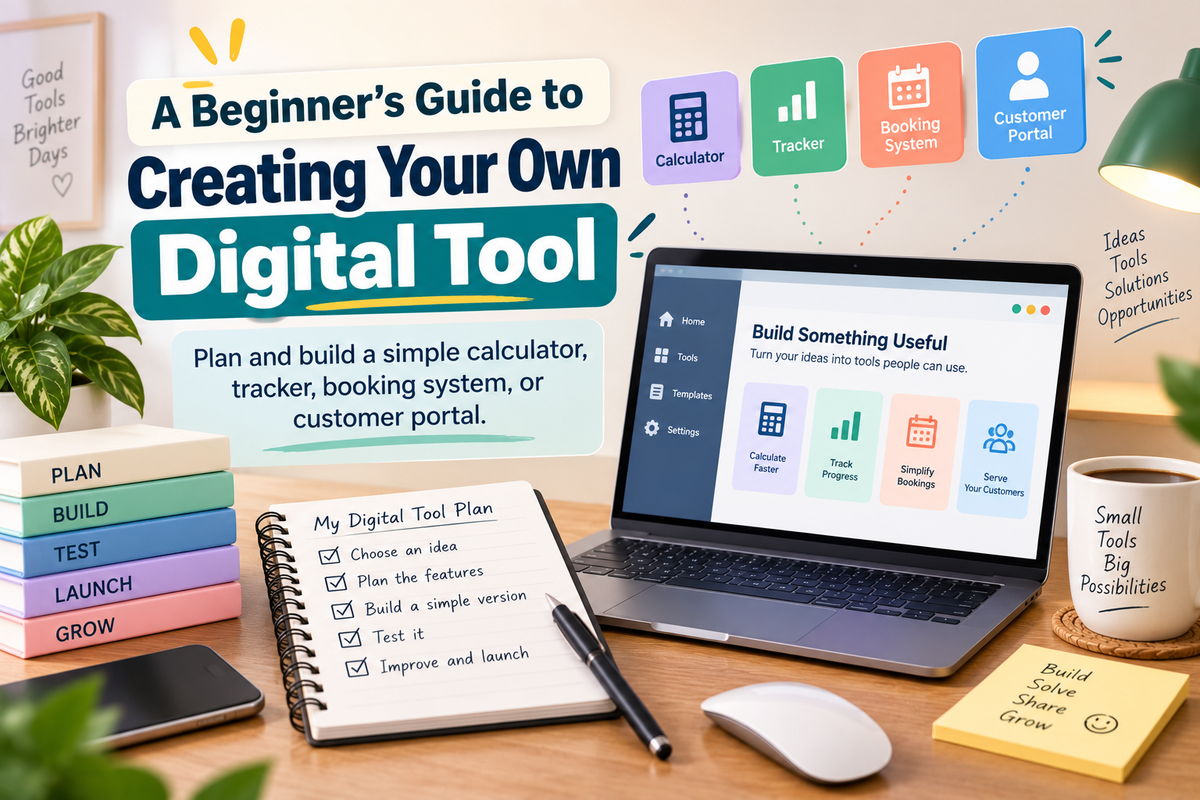
Plan and build a simple calculator, tracker, booking system, or customer portal.
For most of history, "build your own tool" meant "learn to code first" or "hire someone who did." That wall kept a lot of useful ideas locked in people's heads.
That wall is down. Today you can plan and build a simple, genuinely useful digital tool - a calculator, a tracker, a booking system, a customer portal - by describing what you want and arranging pieces visually. No programming background required.
The only real requirements now are a clear idea and a bit of patience. Here's the whole path, start to finish.
STEP 1: NAIL THE ONE JOB IT DOES
Resist the urge to build something with twenty features. Your first tool should do one useful thing well. Write it in a single sentence: "This tool helps [who] do [what]." Clarity here saves you hours later and keeps the whole thing simple enough to actually finish.
STEP 2: SKETCH IT ON PAPER FIRST
Before touching any software, draw it out. What does someone see first? What do they type or tap? What do they get back? A rough paper sketch is your map, and paper is the cheapest, fastest place to fix mistakes.
STEP 3: BUILD IT WITH A NO-CODE TOOL
Now recreate your sketch in a no-code builder. You'll drag and arrange ready-made pieces - input boxes, buttons, lists - and many tools let you describe a feature in plain words and generate it. Build only what's on your sketch. Resist adding "just one more thing."
STEP 4: TEST IT WITH REAL PEOPLE
Hand it to three or four people and watch them use it without your help. Where do they hesitate? What did they expect that isn't there? This step feels awkward and it's the most valuable one you'll do. Fix whatever trips them up.
STEP 5: LAUNCH SMALL, THEN IMPROVE
Don't wait for perfect. Share it with a small group first, gather what they say, and improve one thing at a time. Real feedback beats endless polishing every single time.

WHAT SHOULD YOU BUILD? START WITH ONE OF THESE
Good first tools are small and solve one real annoyance. Any of these makes a perfect starter:
- A calculator that does a specific sum people always get wrong or find tedious.
- A tracker for a goal, a habit, or a set of numbers people want to watch over time.
- A booking system so customers self-schedule instead of messaging back and forth.
- A simple customer portal where clients can find their info, documents, or updates in one place.
Notice they all do one clear job. That's not a limitation - it's the whole strategy.
A QUICK LAUNCH CHECKLIST
Before you share your tool with anyone, make sure you can tick these:
- I can describe its one job in a single sentence
- I sketched the main screens before building
- I built only what was on the sketch, nothing extra
- I watched at least three people try it
- I shared a rough first version instead of waiting for perfect
Here's the honest, encouraging truth: your first tool won't be flawless, and that's exactly the point. Every good tool started as a rough version that got better with real use. Shipping something small and imperfect teaches you more than planning something big and perfect ever will.
MISTAKES THAT TRIP UP FIRST-TIMERS
Learn from other people's stumbles instead of your own:
- Adding too many features. Every extra one doubles the confusion. Ship the single thing, then listen before adding more.
- Building in secret. Waiting until it feels ready means you learn nothing until it's too late. Show it early and often.
- Chasing perfect. The polished tools you admire started rough too. Yours is allowed to as well.
- Solving a problem nobody has. Build for a real annoyance you or someone you know actually feels, not a clever idea with no user.
Sidestep those four and you're ahead of most first-time builders. The goal of your first tool isn't to impress anyone - it's to prove to yourself that you can take an idea in your head and turn it into a real, working thing. Once you've done that once, you'll never see "I could never build that" the same way again.
❯❯❯❯ Your next income idea could be hiding in what you already know. Explore what’s possible with AI.
KEY TAKEAWAY
Building your own digital tool no longer takes code - it takes a clear idea and the willingness to start small. Define the one job, sketch it, build only that in a no-code tool, and launch a rough version to real people this week.
━━━━━━━━━━━━━━━━━━━━━━━━━━━━━━━━━━━━
The tool in your head is one weekend away from being real.
- AI Business Builder