
Build a Business That Gives You Your Life Back

How simple written processes create opportunities for delegation, automation, and more freedom.
"Can you show me how to do that again?"
If you've ever been asked that three times about the same task, you've met one of the quietest time drains in any business.
The process lives in your head. Every time someone else needs it, you have to pull it out and explain it from scratch.
📖 A RECIPE FOR YOUR WORK
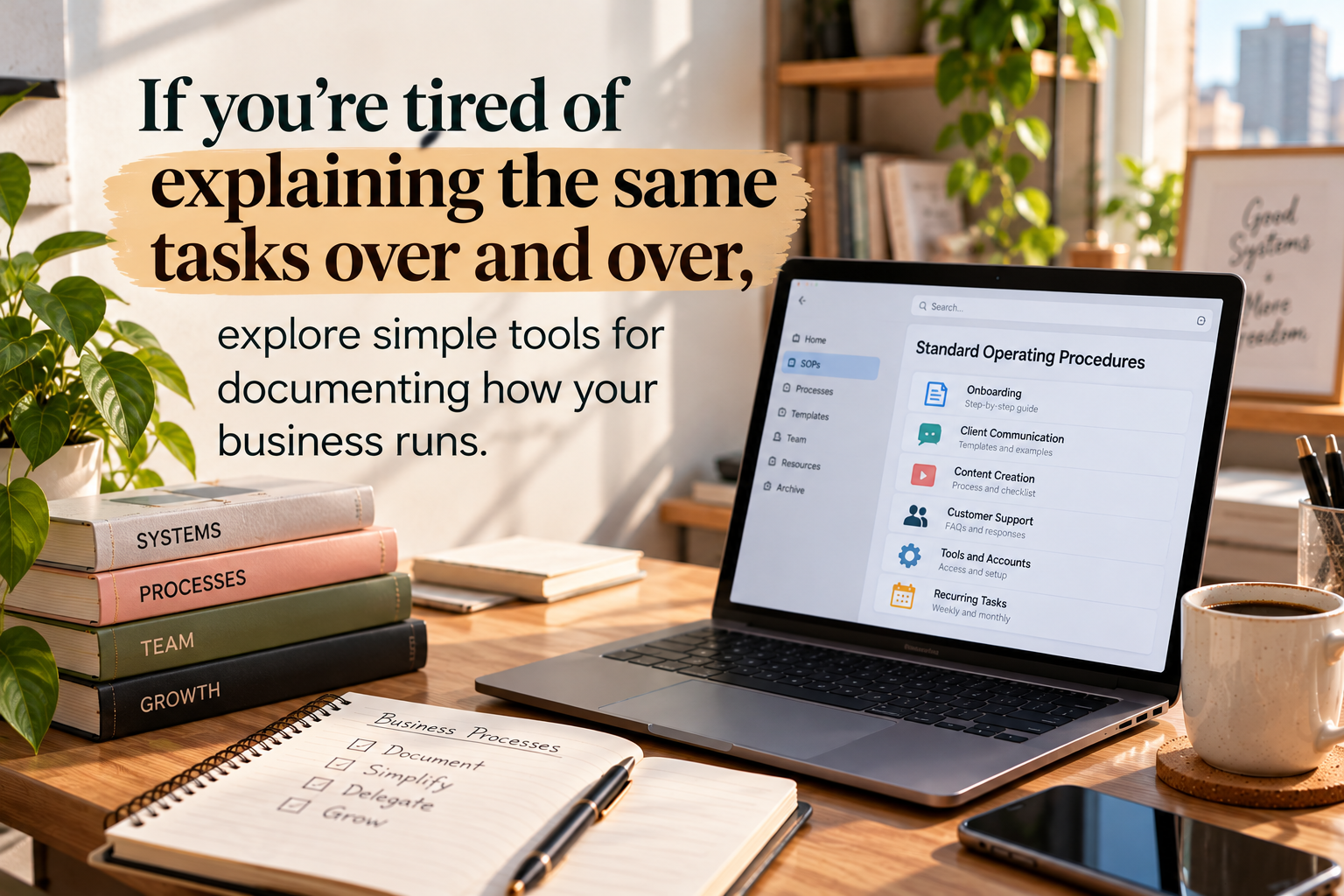
A written process, sometimes called an SOP or standard operating procedure, is just a set of clear steps for doing a task the same way every time.
The phrase sounds corporate, but the idea is simple. It's a recipe for a piece of work.
How to process a refund. How to onboard a new client. How to publish a blog post. How to close up the shop at night.
Written processes matter for three reasons.
They make delegation possible. You can't hand off a task that only exists in your memory.
They make quality consistent. The task gets done the same way, whether it's you, a new hire, or a freelancer doing it.
They're the foundation of automation. You can only automate a process you can describe step by step. Many automation projects stall because nobody wrote the steps down first.
Most small businesses skip this because writing processes feels slow and boring. That's exactly where AI helps.
🎤 DOCUMENT A PROCESS IN 20 MINUTES
Here's a fast way to document a process with AI.
Talk it through. The next time you do the task, describe each step out loud and record it with a voice memo or a transcription app. Don't worry about being neat.
Let AI tidy it up. Paste the transcript into an AI assistant and ask: "Turn this into clear numbered steps that a new employee could follow. Point out anything that seems unclear or missing."
Test it. Give the steps to someone else, or follow them yourself exactly as written. Fix anything that confuses.
What once took an afternoon of writing now takes about 20 minutes.
And the AI's "anything unclear or missing" check often catches steps you do automatically and forgot to mention.
🗃️ PROCESSES PEOPLE ACTUALLY USE
1. Start with the task you explain most often That's the one with the biggest payoff.
2. Write for a smart beginner Assume the reader is capable but has never done this before.
3. Include the "why" for tricky steps A short reason helps people make good choices when something unusual happens.
4. Keep them where people work A shared folder or a simple wiki everyone can find beats a perfect document no one opens.
5. Update them as you go When a step changes, change the document the same day.
🚀 A SIMPLE WAY TO START
Choose one task you've explained more than twice this month.
The next time you do it, record yourself talking through each step.
Ask an AI assistant to turn the recording's transcript into numbered steps, review them, and save the result somewhere shared.
❯❯❯❯ Ready to get processes out of your head and into a system? Discover resources that make it easier.
📌 NOTE
Remove passwords, account numbers, and private customer details from any recording or document you share with an AI tool. Keep login information in a secure password manager instead, and refer to it in your process rather than writing it in.
KEY TAKEAWAY ⤵
You can't delegate or automate what only lives in your head.
Talk it through once, let AI tidy it up, and save it where people work.
What's written down can be shared, improved, and eventually run without you.
- AI Business Builder