Effective ways to turn knowledge into a product
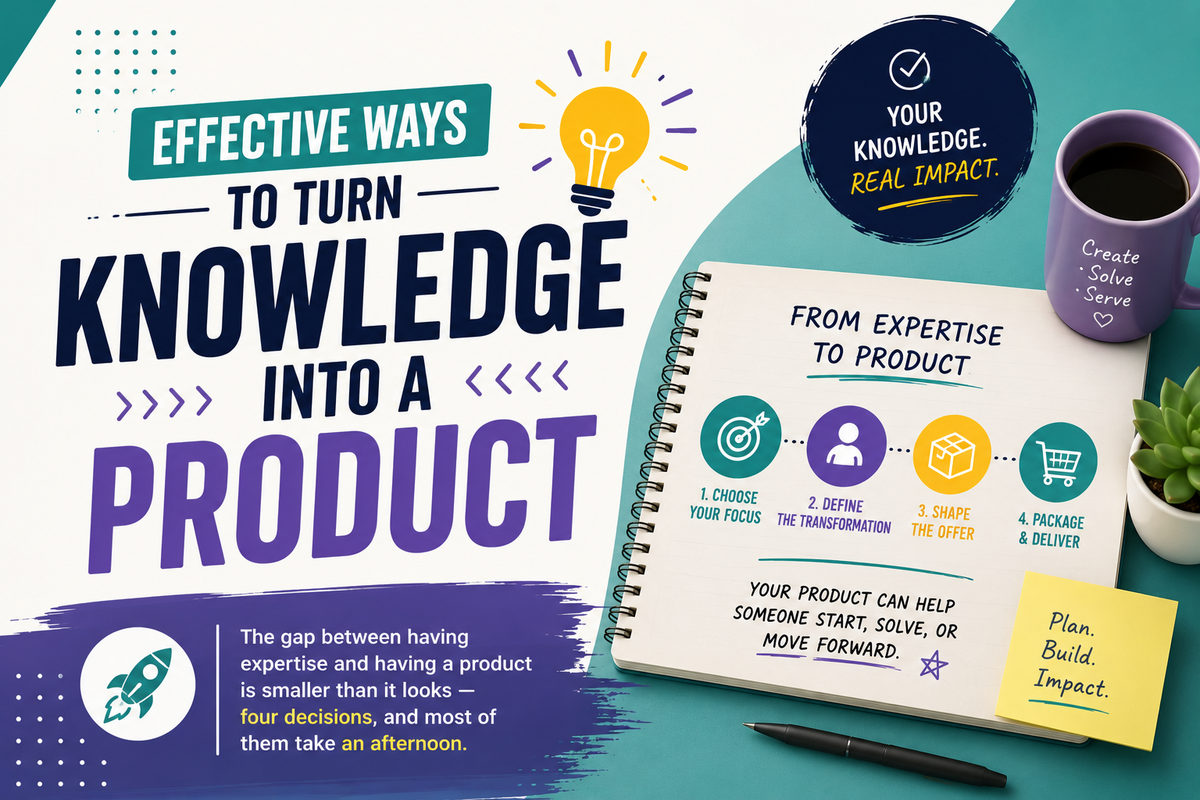
The gap between having expertise and having a product is smaller than it looks — four decisions, and most of them take an afternoon.
Plenty of people know enough to sell something and have nothing to sell.
That’s not a knowledge problem. It’s a packaging problem, and it’s considerably more solvable than it feels from the inside.
The difficult part is rarely finding more information. It’s choosing which part of what you know is useful enough, specific enough, and clear enough for someone to pay for.
Expertise is a cloud. A product is a shape.
Nobody buys everything you know. They buy a specific outcome, described in a way they recognise as their own situation.
Turning one into the other is four decisions, and none of them require you to learn anything new.
Nobody wants your knowledge. They want the result of it, delivered in a form they can use on Tuesday.
➥ Decision one: who exactly is it for? Not “small businesses.” A person in a situation. “Bookkeepers taking on their first employee.” Narrow enough that the right person reads it and thinks that’s me, which is the only reaction that sells anything.
➥ Decision two: what does it remove? Every good product removes something — hours, uncertainty, a mistake, a decision. Name the thing it removes and you’ve written most of your description.
➥ Decision three: what shape does it take? A checklist, a template, a short guide, a recorded walkthrough, or an hour of your time. Pick the smallest shape that delivers the outcome. Small sells faster, gets finished sooner, and gives you useful feedback earlier.
➥ Decision four: what does it cost? Start lower than feels right, and raise it once five people have paid. The first price exists to prove people will buy at all. It doesn’t have to be the price you keep forever.
You don’t need a course with twelve modules when a five-page guide solves the problem. You don’t need a membership when one useful template will do. The aim is not to package the most knowledge. It’s to package the shortest reliable route to a result.
━━━━━━━━━━━━━━━━━━━━━━━━━━━━━━━━
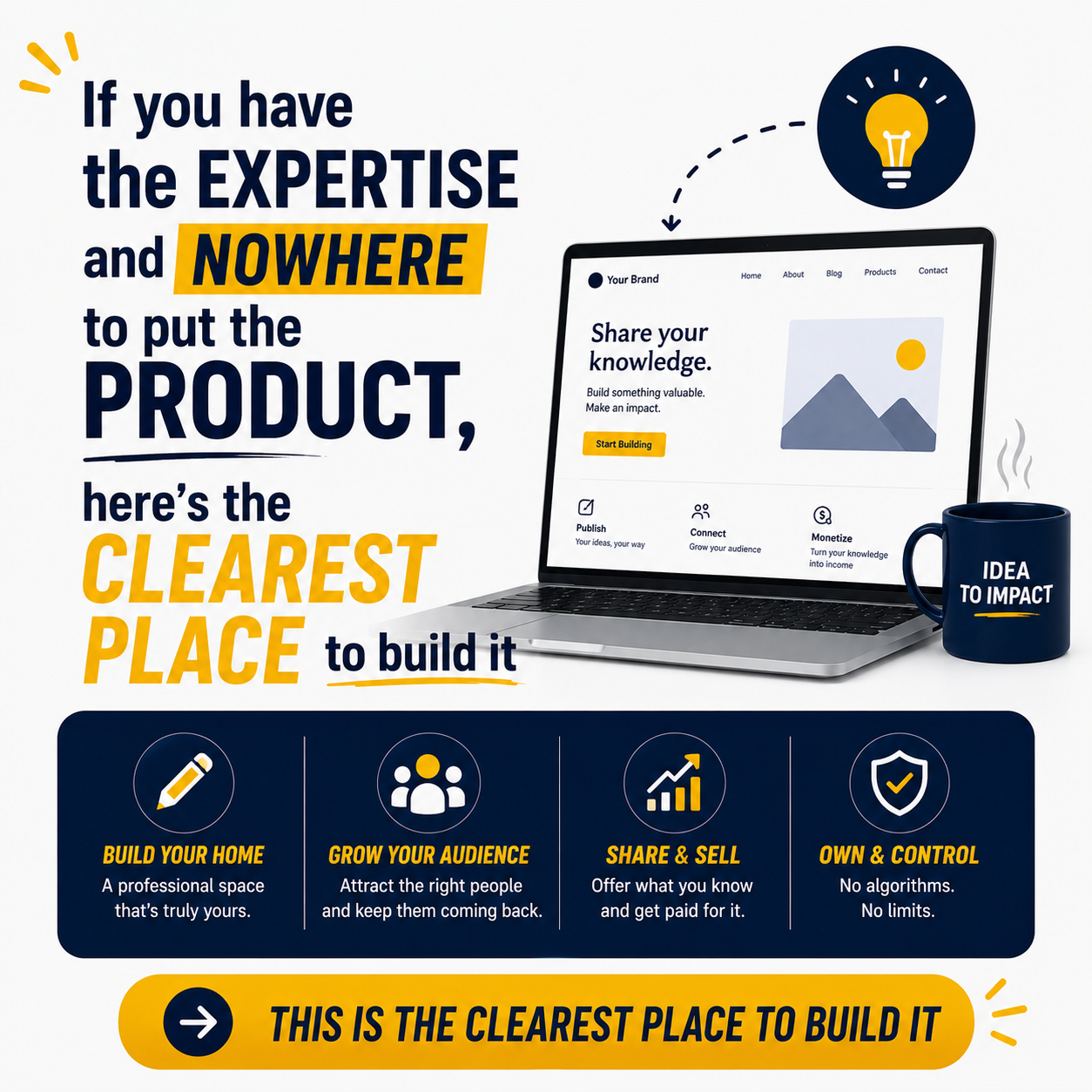
The free writing that shows people how you think, the list of the ones who want more, and the paid side when you’re ready — one place, nothing technical between you and publishing.
It suits people who already know their subject and want a straight route from knowing it to being paid for it. Publish freely first, let the trust build, then offer the thing you packaged to the people already reading. That order is what makes it work.
━━━━━━━━━━━━━━━━━━━━━━━━━━━━━━━━
What to do once it exists.
● Sell it before you finish it. Describe it properly, take money, then build it for the people who paid. Uncomfortable and correct.
● Show the thinking free. Share useful parts of your process, explain common mistakes, and answer the questions buyers already have. The people who’ve read your work for a month don’t need convincing — they need to be told the thing exists.
● Let five buyers edit it. They’ll tell you exactly what’s missing, confusing, or unnecessary. That feedback is worth more than any amount of polishing alone.
● Use their language. Pay attention to how buyers describe the problem. Their words should shape your headline, description, and future content.
● Keep it in print, not in progress. A finished small thing earns. A large thing being perfected does not.
The most common failure isn’t a bad product. It’s a good one nobody ever heard about, because all the effort went into building and none into telling people.
Four decisions this week. Who, what it removes, what shape, what price.
Then describe it in one paragraph and show it to five people who match the buyer you chose. You’ll learn more from their reaction than from another month spent planning.
That’s the entire packaging job.
— AI Business Builder