Five Mistakes People Make in Their First Month With AI
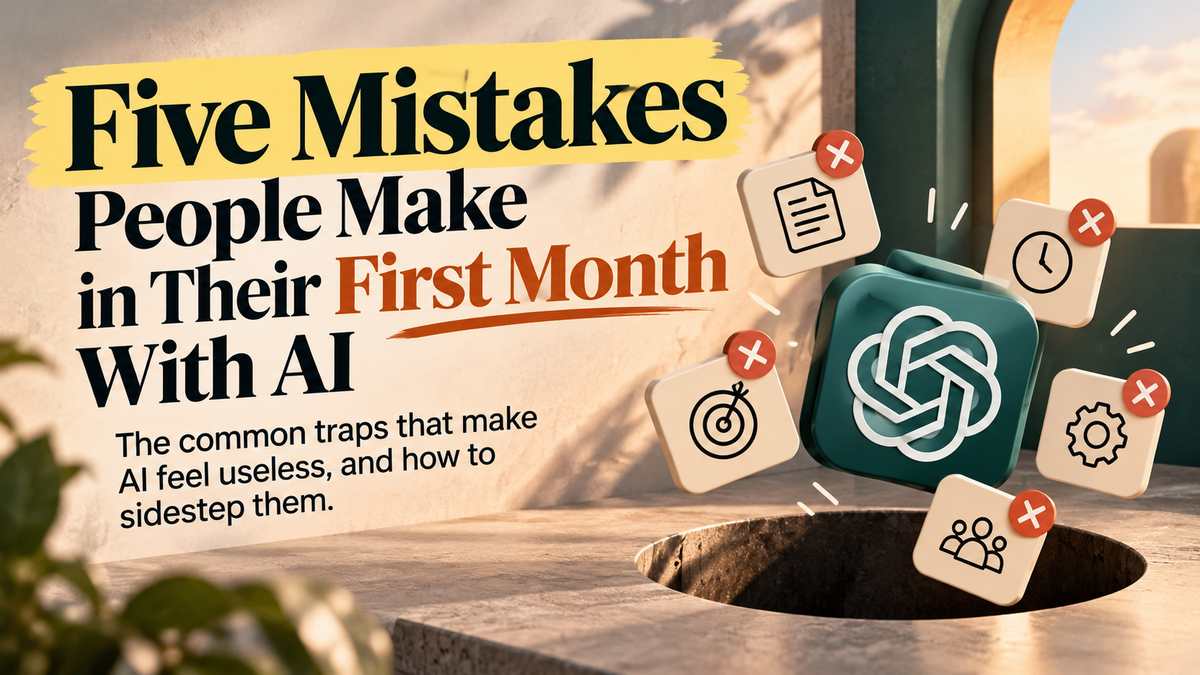
The common traps that make AI feel useless, and how to sidestep them.
Many people try AI tools, feel underwhelmed, and quietly stop using them.
They decide the tools are overhyped, or "not for them."
Often the tool wasn't the issue. A handful of common mistakes got in the way.
🚫 THE FIVE COMMON TRAPS
Mistake 1: Asking once and giving up.
People type a short request, get a mediocre answer, and conclude the tool isn't good. But the first answer is a draft.
The value often appears in the second and third rounds, when you say "shorter," "more specific," or "use this example."
Fix: Plan to give at least two rounds of feedback before judging.
Mistake 2: Giving no context.
"Write a social post" produces something generic. The AI doesn't know your business, your audience, or your style unless you tell it.
Fix: Use the four-part brief from October 5: task, context, format, and guardrails.
Mistake 3: Trusting everything it says.
The opposite problem. Some people copy AI output straight into reports or client emails, including made-up facts or wrong numbers.
Fix: Check specific facts, figures, and claims before using them, especially in anything public or important.
Mistake 4: Trying to use it for everything at once.
New users often get excited and try AI on every task. It feels overwhelming, results are mixed, and the habit doesn't stick.
Fix: Pick one or two recurring tasks and get really good at using AI for those before expanding.
Mistake 5: Letting it replace your voice.
AI writing can sound polished but bland. When everything you send starts sounding the same, people notice, and it can weaken trust.
Fix: Use AI for structure and first drafts, then add your own phrases, opinions, and specific details.
💡 IT'S USUALLY HOW, NOT WHAT
Notice that every mistake above is about how the tool is used, not what the tool can do.
Once you avoid these traps, AI usually becomes much more useful. It saves time on drafting, helps you think through problems, and makes routine work lighter.
A useful mindset is to treat AI like a capable new assistant.
It's fast and willing, but it needs clear instructions, feedback, and supervision while you learn how to work together.

📌 HABITS THAT MAKE AI USEFUL
1. Save prompts that work Keep a document of your best requests so you don't have to reinvent them.
2. Review before sending Make it a firm habit to read every AI-assisted piece before it goes out.
3. Give it examples of your work Sharing a sample of your writing helps it match your style.
4. Reflect weekly Ask yourself where AI saved time this week and where it didn't.
🚀 A SIMPLE WAY TO START
Look back at the last few times you used an AI tool.
Which of these five mistakes showed up? Choose one, and fix it on your next three tasks.
For most people, adding context and doing a second round of feedback makes the biggest immediate difference.
❯❯❯❯ Want to skip the trial and error? Discover practical resources for getting better results faster.
📌 NOTE
Feeling unsure or disappointed when starting with AI is normal. Everyone goes through a learning curve.
Start small, stay curious, and give yourself time to build the habit.
KEY TAKEAWAY ⤵
Most disappointing AI results come from how the tool is used.
Add context, give feedback, check facts, and start small.
Every expert user was once a disappointed beginner.
- AI Business Builder