Here's the opportunity hiding in your own expertise
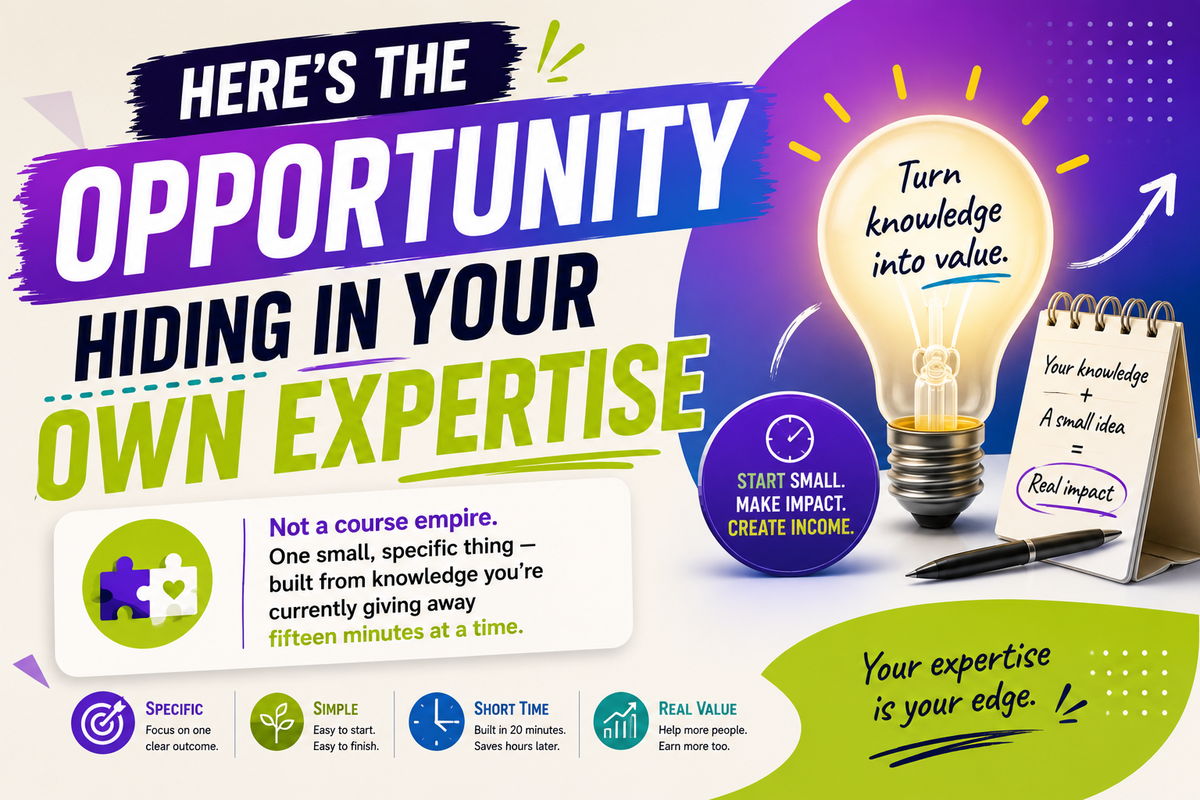
Not a course empire. One small, specific thing — built from knowledge you're currently giving away fifteen minutes at a time.
Somewhere in your week there's a fifteen-minute conversation you've had a hundred times.
Someone asks how you'd handle something. You explain. They thank you and say it was really helpful. And that's where it ends, every single time.
That conversation is the product. It just doesn't look like one from the inside.
Expertise stops feeling like expertise the moment it becomes yours. What took you six years to learn now feels like common sense, and common sense doesn't feel like something you can charge for.
The person asking doesn't experience it that way at all. To them it's the answer they've been looking for.
The things you explain most often are the things you understand best. That isn't a coincidence and it isn't nothing.
Here's what people are actually selling. All four are small.
The checklist you run in your head. Written down properly, in order, with the traps marked. Twenty minutes of your knowledge, saving someone two weeks of mistakes.
The template you've rebuilt forty times. The proposal, the contract, the onboarding sequence, the pricing sheet. You already made it. Selling it costs you nothing further.
The walkthrough of one decision. How you'd choose between the two options, and what you'd look at. Specific decisions are worth more than general advice, every time.
Your attention, priced properly. An hour with someone who's done it before. The oldest product there is, and still the easiest first sale.
Four things that make the first attempt work.
● Price it low and raise it later. The first version exists to prove people will pay at all. You can double it once five people have.
● Sell to five people before making it pretty. Design is what people do instead of selling. Five buyers will also tell you what's actually missing.
● Write the description as the explanation you'd give a friend. Plain language, specific outcome, no positioning. The sales page that converts is usually the one that sounds least like a sales page.
● Let the free work do the selling. Publish the thinking openly and the paid thing sells itself to the people already convinced. Reverse that order and you'll be pushing uphill for months.
One honest note on timelines: months, not weeks. Anything promising otherwise is selling you something. But the first sale usually arrives far earlier than people expect, and it changes how the whole thing feels.
You don't need to build anything new this month. You need to write down the conversation you keep having.
— AI Business Builder