How to Create a Personal Learning Plan for Any Skill
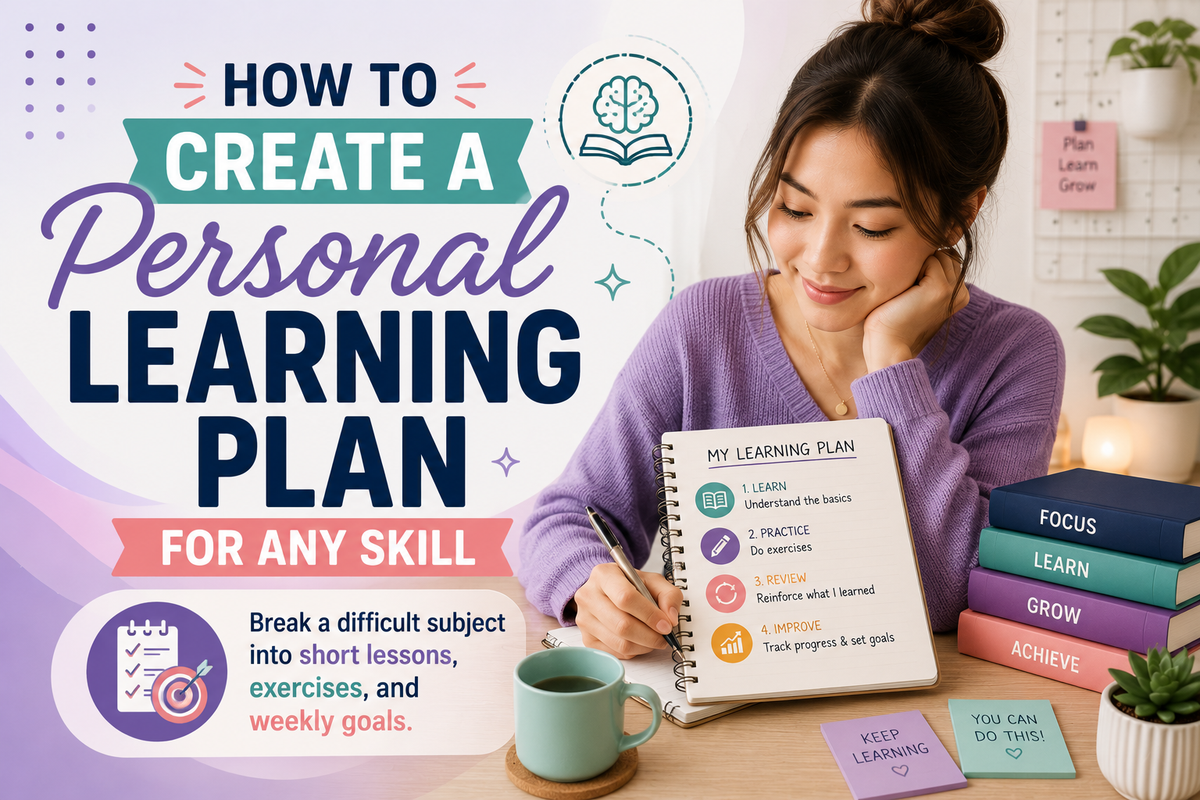
Break a difficult subject into short lessons, exercises, and weekly goals.
Think of a skill you’ve always meant to learn but never did.
Odds are, it wasn’t too hard for you. It just looked too big.
That’s one of the biggest reasons learning attempts fizzle out. We stare at the whole intimidating mountain, feel overwhelmed, and quietly give up.
The skill was never necessarily the problem.
The approach was.
The solution is to stop trying to learn everything at once. Instead, break the skill into small, doable pieces with a clear path forward.
Here’s a simple framework you can use for almost any skill.
━━━━━━━━━━━━━━━━━━━━
🧩 First, Turn the Mountain Into Steps
Before scheduling lessons or choosing courses, break the skill into its main parts.
Ask someone knowledgeable or use an AI assistant:
“What are the main building blocks of this skill, in the order I should learn them?”
Suddenly, the vague giant becomes a manageable list of smaller topics.
And a list is something you can actually work through.
━━━━━━━━━━━━━━━━━━━━
📅 Then Build a Four-Week Starter Plan
You don’t need to map out an entire year.
Start with one month of steady, focused practice.
Here’s a structure that works for almost any skill:
Week 1 → Foundations
Learn the core ideas and vocabulary. Keep the daily lessons short and simple. The goal is to understand the basics well enough that the subject no longer feels completely unfamiliar.
Week 2 → Hands-On Basics
Start doing the simplest version of the skill yourself. Reading and watching can help, but eventually you need to practice.
Week 3 → Real Practice
Move on to slightly more challenging exercises. Make mistakes, figure out what went wrong, and try again. This is where your knowledge starts turning into ability.
Week 4 → A Small Real Project
Use the skill to create or accomplish something real, even if it’s small. Completing a project gives everything you’ve learned a practical purpose.

━━━━━━━━━━━━━━━━━━━━
⏱️ Keep the Lessons Short
You don’t need hours every day.
Twenty to thirty focused minutes regularly can be more useful than waiting for a huge block of free time once a week.
The goal is to make learning something you can realistically return to.
Consistency matters more than trying to do everything at once.
━━━━━━━━━━━━━━━━━━━━
🎯 Set One Clear Goal Per Week
Give each week a single finish line:
“By Friday, I can do X.”
Instead of saying, “I’m going to learn graphic design,” your weekly goal might be:
“By Friday, I can create a simple social media graphic from scratch.”
Specific goals make progress easier to see.
And seeing progress gives you a reason to keep going.
━━━━━━━━━━━━━━━━━━━━
🧠 Make It Stick
A few simple habits can make your learning plan much more effective:
→ Test yourself instead of only re-reading.
Try recalling what you learned without looking at your notes first.
→ Practice the actual skill.
Don’t spend all your time learning about something. Give yourself opportunities to actually do it.
→ Add a little accountability.
Tell someone what you plan to accomplish that week or keep a simple progress tracker.
→ Expect some frustration.
Learning rarely feels smooth the entire time. Difficulty doesn’t automatically mean you’re doing something wrong.
Research on learning has repeatedly found strong support for techniques such as retrieval practice and spacing learning across multiple sessions.
That means a plan built around short lessons, active practice, and regular self-checks isn’t just organized. It also lines up well with how people tend to retain information effectively.
━━━━━━━━━━━━━━━━━━━━
⚠️ Learning Traps to Avoid
Most learning plans don’t fail because someone lacks ability.
They often fail because of a few predictable habits.
Collecting instead of doing.
Ten saved courses aren’t the same as progress. One completed exercise is more valuable than another unopened resource.
Passive re-reading.
Reading something repeatedly can make it feel familiar without proving that you actually understand or remember it. Close your notes and test yourself.
Going too big too fast.
Starting with an exhausting schedule makes it harder to stay consistent. Begin with something you can realistically maintain.
Learning completely in secret.
A little accountability can help. Share your weekly goal with someone or simply keep a visible record of your progress.
━━━━━━━━━━━━━━━━━━━━
🤖 Let Tools Help Build the Plan
This is where modern tools can make learning much easier to organize.
Instead of spending hours figuring out how to break down a subject, you can ask an AI assistant to:
→ Identify the main building blocks
→ Put them in a logical learning order
→ Create a four-week schedule
→ Suggest short daily lessons
→ Generate exercises and practice questions
→ Quiz you on what you’ve learned
→ Suggest a small final project
That removes one of the biggest obstacles at the beginning:
Not knowing what to learn first.
You still have to do the real work of practicing, experimenting, and improving. But you don’t have to spend days staring at a complicated subject wondering where to begin.
The roadmap can be created in minutes.
Then your job is simply to start walking it.
❯❯❯❯ Use AI to explore new opportunities, solve everyday problems, and create a business that builds on your skills, knowledge, and creativity.
━━━━━━━━━━━━━━━━━━━━
💡 Key Takeaway
Almost any skill becomes less intimidating when you stop trying to learn it all at once.
Break it into building blocks.
Follow a four-week starter plan.
Keep your sessions short and consistent.
Practice instead of only consuming information.
And give yourself one clear goal every week.
Small steps, repeated consistently, can climb a very big mountain. Start with step one.
— AI Business Builder