How to Find the Right Tool for Any Job — Without Getting Lost in a Hundred Options
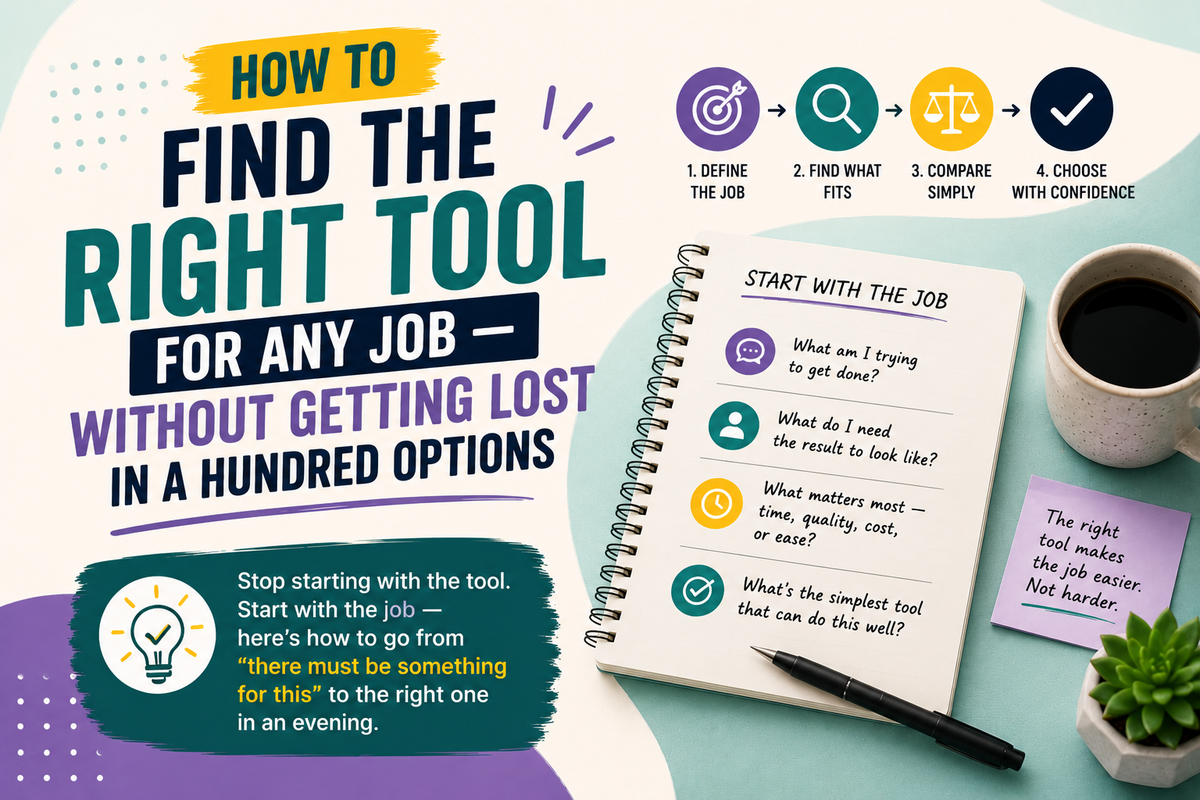
Stop starting with the tool. Start with the job — here's how to go from "there must be something for this" to the right one in an evening.
Everyone starts the same way, and it’s usually the wrong way.
They ask, “What’s the best tool?” and get buried under hundreds of ranked lists. All sponsored, all confident, and almost none written for the specific job they’re trying to do.
The tool was never the starting point. The job is.
“What’s the best AI tool?” has no single answer, just like “What’s the best vehicle?” has no answer.
Best for what? Carrying gravel and commuting to a city require completely different vehicles.
Start with the exact task instead. Describe it in plain words, and the search becomes much less overwhelming.
Describe the job in one sentence a friend would understand. That sentence is your search, not the word “AI.”
The method: four steps, one evening
➥ Write the job down as a sentence.
“I need to turn hour-long client calls into short written summaries.”
Keep it specific and avoid broad words like “productivity.” Half the battle is clearly naming what you actually need done.
➥ Search the sentence, not the category.
Try searching, “How do people turn recorded calls into notes?”
That will show you what people actually use. Searching “best AI tools 2026” will mostly show you which products paid to be included.
➥ Ask for the category before the options.
Start with a simple question:
“What kinds of tools can turn recordings into written summaries, and what features should I compare?”
This gives you the landscape and the criteria before product names start competing for your attention.
➥ Check whether the free tier can finish your real job.
Use your actual recording, document, or task instead of the polished sample provided by the company.
If the tool completes the full task twice without hitting a paywall, you may have found the right one. If the paywall appears exactly where the useful part begins, keep looking.
━━━━━━━━━━━━━━━━━━━━━━━━━━━━━━━━

A page that belongs to you, a list of people who want to hear from you, and the option to charge once there’s demand, with nothing technical standing between creating something and putting it in front of someone.
It’s built for people turning new skills into something real during their evenings, even without a complicated launch plan. Find the tool, do the work, and give that work somewhere to land where it can accumulate instead of simply scrolling past.
━━━━━━━━━━━━━━━━━━━━━━━━━━━━━━━━
Four things that separate a good find from a wasted week
● Ignore the ranked lists. Most are advertising wearing the costume of a review. The phrase “best tools” is usually the first clue.
● Choose the boring tool you’ll actually use. The impressive tool you open twice is worth less than the simple one you’re still using next month.
● Use one tool per job. Testing four tools for the same task is how people end up doing everything manually again. Choose one, learn it properly, and move on.
● Never upload confidential information while testing. Check how the tool stores and uses your data before giving it anything important. That is one mistake that can become genuinely expensive.
One final test before you commit
Explain the tool without using any of its marketing language.
What does it take in? What does it produce? How much work is still left for you afterward?
If you cannot answer those three questions clearly, the tool probably hasn’t solved the job. It has only made the demonstration look easy.
The right tool is usually not the newest or most talked about. It’s the one that completes your specific job, is easy enough to keep using, and offers enough value before asking you to pay. Impressive fades quickly. Useful stays.
Write down one job you keep doing by hand. Search the sentence instead of the category, then give one free tool an evening to prove itself.
That’s the whole method.
— AI Business Builder