How to Use Technology Without Sharing Too Much Personal Information
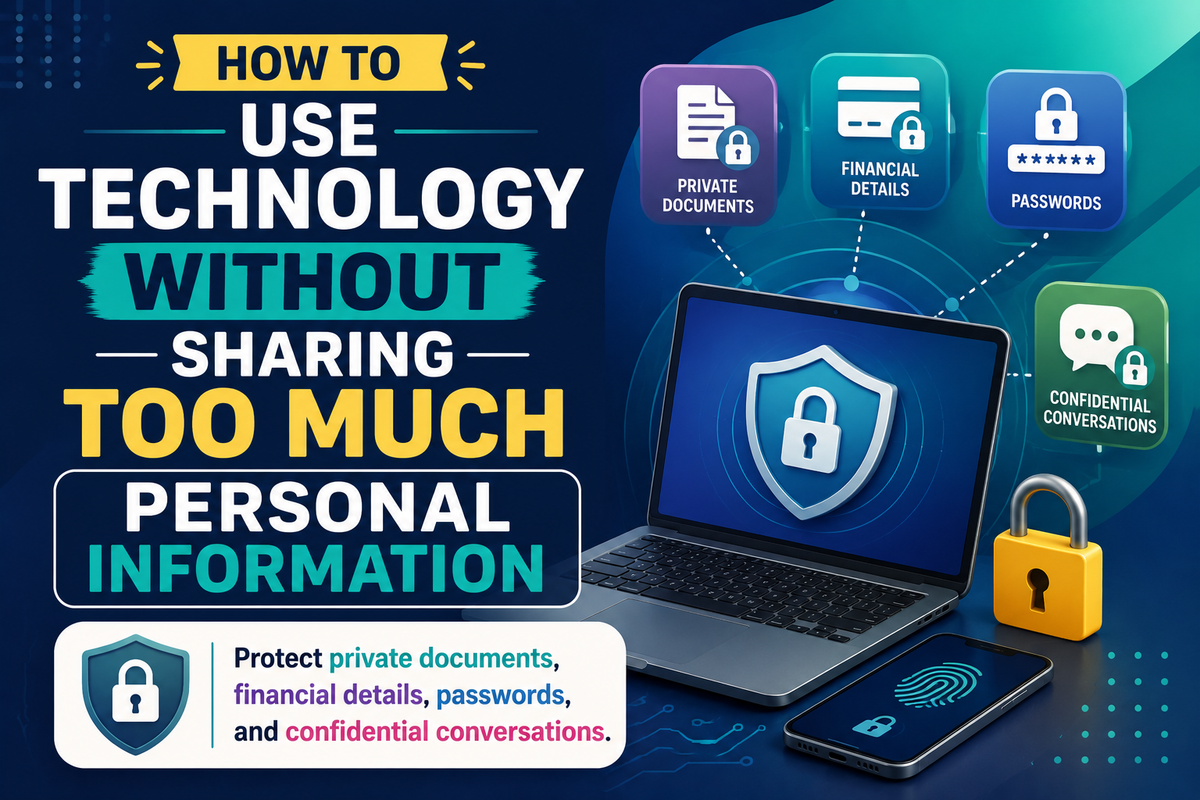
Protect private documents, financial details, passwords, and confidential conversations.
Here's a false choice a lot of people believe they're stuck with: either enjoy modern technology, or protect your privacy. Pick one.
The truth is you can have both. You don't need to go off the grid or become a security expert. A handful of simple habits protect the things that actually matter, while you keep using the tools that make life easier.
The goal isn't paranoia. It's control - deciding what you share on purpose, instead of leaking it by accident. Let's go through what to protect and how.
🔐 PRIVATE DOCUMENTS
Your personal files - IDs, contracts, records - shouldn't be scattered across random apps and email attachments. Keep them in one secure, protected place, and think twice before uploading sensitive documents to services you don't fully trust. When you must share one, share it directly with the specific person, not into a public or loosely controlled space.
💳 FINANCIAL DETAILS
Your financial information is a prime target, so guard it deliberately. Only enter card and bank details on trusted, secure sites. Be wary of any app or message asking for financial information you didn't expect to give. And never send full account details over casual channels like ordinary text or chat.
🔑 PASSWORDS
Weak, reused passwords are the single biggest crack in most people's security. If one site gets breached, every account sharing that password is exposed. The fix is simple: use a strong, unique password for each important account, and let a password manager remember them so you don't have to. Turn on extra login verification wherever it's offered.
💬 CONFIDENTIAL CONVERSATIONS
Not every conversation belongs in every app. For anything genuinely sensitive, use private, secure channels rather than open ones. And remember a simple rule: assume anything you type somewhere could one day be seen by someone you didn't intend. That awareness alone changes what you share.
🛡️ UNIVERSAL HABITS THAT PROTECT EVERYTHING
Beyond the specific categories, a few default habits quietly protect all of it:
- Share less by default. Before entering any personal detail, ask whether it's truly needed. Often it isn't.
- Check app permissions. Many apps ask for far more access than they need. Turn off what doesn't make sense.
- Be skeptical of "free" that wants your data. If something's free, sometimes your information is the price. Know the trade before you accept it.
- Keep things updated. Updates often fix security holes, so keeping devices and apps current is quietly one of the best protections there is.
✅ A QUICK PRIVACY CHECKLIST
- I use a strong, unique password for each important account
- I've turned on extra login verification where I can
- My sensitive documents live in one protected place
- I only enter financial details on trusted, secure sites
- I check what permissions my apps actually have
Here's a fact worth remembering: most personal information doesn't leak through dramatic hacks. It's given away, a little at a time, through oversharing, reused passwords, and apps quietly collecting more than they need. That's actually good news - because it means the fix is largely in your hands, and these simple habits close most of the gaps.

⏱️ A TWO-MINUTE SECURITY TUNE-UP
If you do nothing else after reading this, do these three things right now - they close the biggest gaps in the least time:
- Turn on extra login verification for your email and banking. Your email is the master key to most of your other accounts, so protect it first.
- Change any password you know you've reused on important accounts, starting with anything tied to money.
- Skim the permissions on the apps you use most and switch off access that makes no sense - the flashlight app doesn't need your contacts.
Three small actions, a couple of minutes, and you've closed the doors most people leave wide open. Privacy rarely fails all at once; it erodes through small gaps, so closing a few of them puts you well ahead.
🔑 KEY TAKEAWAY
You don't have to choose between convenience and privacy. Protect the essentials - documents, financial details, passwords, and sensitive conversations - with a few deliberate habits, share less by default, and you keep the benefits of technology without leaking what matters.
╰┈➤ˎˊ˗ Use AI to work smarter, create value, and grow your business. Follow this guide!
Privacy isn't going off the grid. It's choosing, on purpose, what you share.
- AI Business Builder