Meetings That Write Their Own Notes
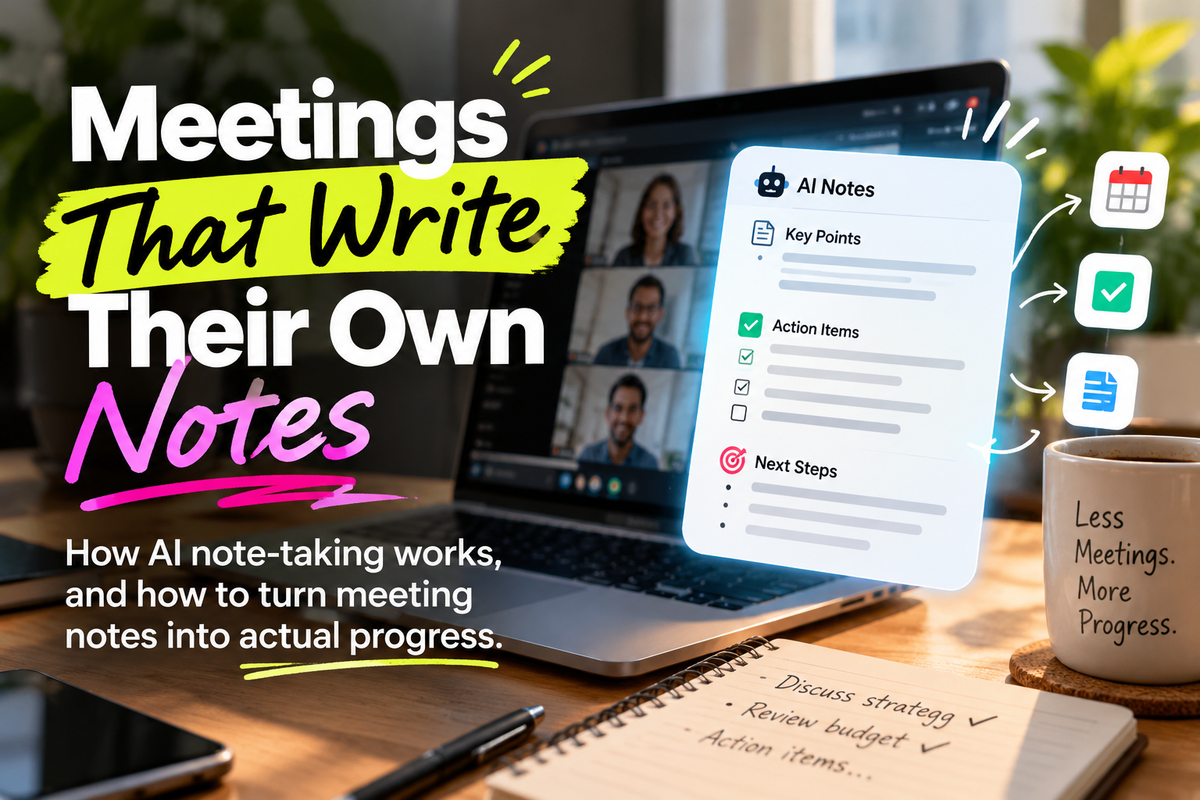
How AI note-taking works, and how to turn meeting notes into actual progress.
You leave a good meeting full of ideas and agreements.
By the next day, nobody is quite sure who agreed to do what. Someone took notes, but they're half-finished. Someone else remembers it differently.
The meeting happened. The progress didn't.
🎙️ HOW AI NOTE-TAKING WORKS
Meetings fail after they end more often than during them. The problem is usually the follow-through: unclear actions, missing notes, and no shared record.
AI note-taking tools are designed for exactly this.
Here's how they generally work. The tool records the audio of a meeting, either by joining your video call or by listening through your device.
It turns speech into text, which is called transcription.
Then AI reads the transcript and produces a summary: main topics, decisions, and action items.
Dedicated tools like Otter.ai and Fireflies.ai do this, and many video platforms, including Zoom, Google Meet, and Microsoft Teams, now offer built-in AI summaries, often on paid plans.
The result is that everyone can focus on the conversation instead of typing, and the meeting ends with a clear written record.
✅ TURNING NOTES INTO PROGRESS
The real value isn't the transcript. It's what you do with it.
A good AI summary gives you a list of action items. Those can become tasks in your project tool, a short follow-up email to the group, or reminders on your calendar.
You can also ask questions of the transcript afterward. "What did we decide about the launch date?" "What concerns did the client raise?" That's handy when you need to recall something from a long call.
For freelancers and consultants, it also helps with client relationships.
Sending a clear summary within an hour of a call shows professionalism and prevents misunderstandings later.
🤝 NOTES THAT RESPECT EVERYONE
1. Always ask permission first Tell everyone the meeting will be recorded and transcribed, and give them a chance to object.
2. Review the action items AI summaries can miss context, mix up who said what, or misunderstand a quiet decision. Spend two minutes correcting them.
3. Send the summary quickly Notes shared the same day get read and acted on. Notes shared next week rarely do.
4. Don't record everything Sensitive conversations, like personal matters, performance discussions, or confidential deals, may be better without recording.
🚀 A SIMPLE WAY TO START
Check whether the video tool you already use has a built-in AI summary feature.
For your next routine meeting, with everyone's permission, turn it on.
Afterward, edit the action items, and send a short summary to everyone within an hour. Notice how much clearer the next steps are.
❯❯❯❯ Want clear notes and action items after every call? See how simple note-taking tools can help.
📌 NOTE
Recording laws differ between countries and regions, and some require everyone's consent. Beyond the law, recording without telling people damages trust. Always be open about recording, and store transcripts securely, especially when they contain client information.
KEY TAKEAWAY ⤵
The transcript isn't the point. The follow-through is.
Ask permission, review the action items, and send the summary the same day.
A meeting is only as good as what happens after it.
- AI Business Builder