The Follow-Up System That Wins Work Without Feeling Pushy
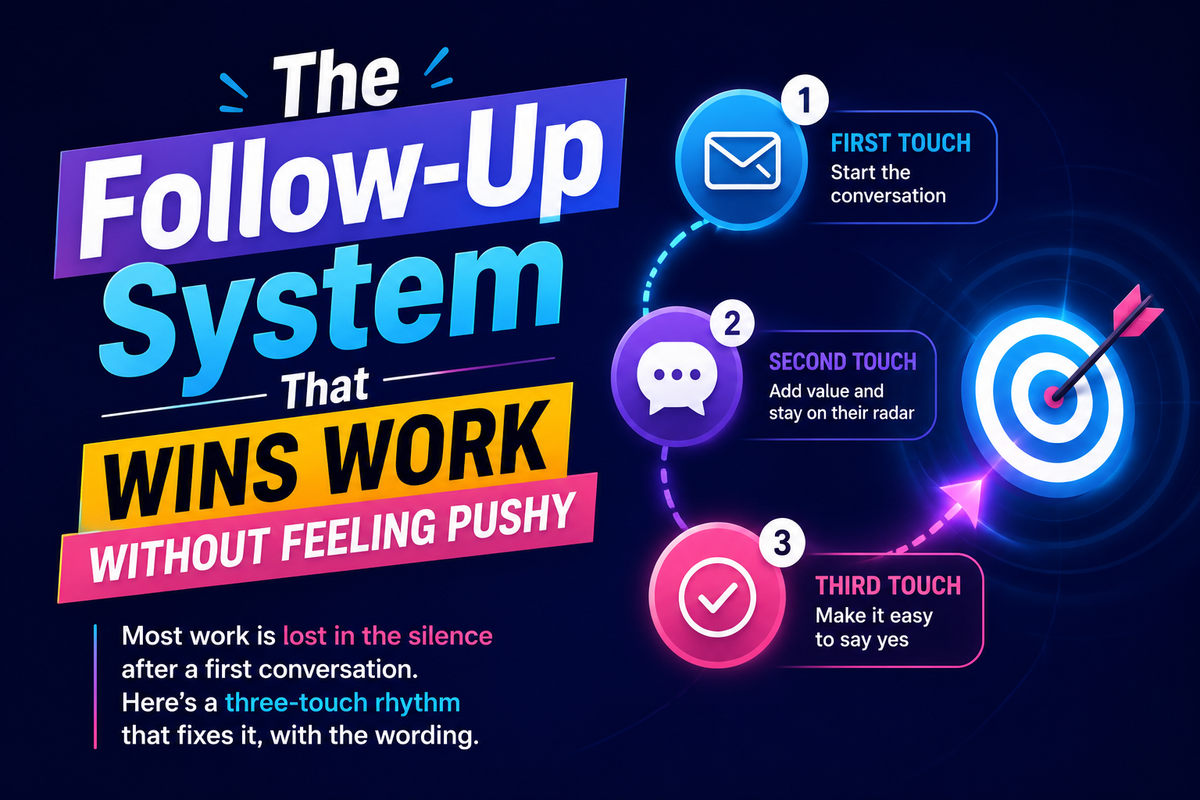
Most work is lost in the silence after a first conversation. Here's a three-touch rhythm that fixes it, with the wording.
Here's where most work is actually lost.
Not in the pitch, not on price. In the fortnight after a good conversation, when nobody follows up because it feels like pestering.
🔴 Silence almost never means no. It means your message arrived on a busy morning.
People intend to reply. Then something urgent lands, your email moves down the screen, and by Thursday it's gone from both the inbox and their memory.
Following up isn't pressure. It's frequently the only reason a decision gets made at all.
Nobody has ever hired the person who followed up too little. Plenty have hired the one who followed up at all.
The three-touch rhythm. Spacing matters as much as wording.
Touch one, three days after: add something. Not "just checking in." Send something useful — a relevant example, a thought about their situation, an answer to something they mentioned. "Been thinking about the timing issue you mentioned — here's how we handled it for someone similar."
Touch two, one week later: make it easy to say no. "Happy to park this if the timing isn't right — just let me know either way and I'll stop cluttering your inbox." This one gets the highest response rate of the three, by a distance, because it hands them an easy exit and most people take the opposite.
Touch three, two weeks after that: close it kindly. "I'll leave this with you — if it comes back around later, you know where I am." Genuinely final. And it's the message that most often gets a reply, months later.

Four things that make it work.
╰┈➤ ● Write the follow-ups when you send the proposal. All three, drafted and scheduled the same day. The reason people don't follow up is never principle — it's that the moment passes and the discomfort grows.
╰┈➤ ● Keep them short. Three lines. A long follow-up reads as anxiety; a short one reads as someone busy who happens to be organised.
╰┈➤ ● Set the end point and mean it. Three touches and stop. Knowing there's a limit is what makes sending them comfortable.
╰┈➤ ● Track who went quiet. A list of unanswered quotes is one of the most valuable things a small business owns, and almost nobody keeps one.
One honest note about expectations: most follow-ups won't get replies, and that's the normal shape of it rather than a verdict on you. The ones that do land tend to be worth considerably more than the effort of sending all of them.
Open your sent folder, find three quotes that went quiet, and send touch two today. It takes ten minutes and it's the highest-return thing on your desk.
❯❯❯❯ And if you'd like enquiries arriving rather than being chased, this is where that starts
The work wasn't lost in the pitch. It was lost in the fortnight nobody used.
— AI Business Builder