Understand Your Customers, Unlock More Sales
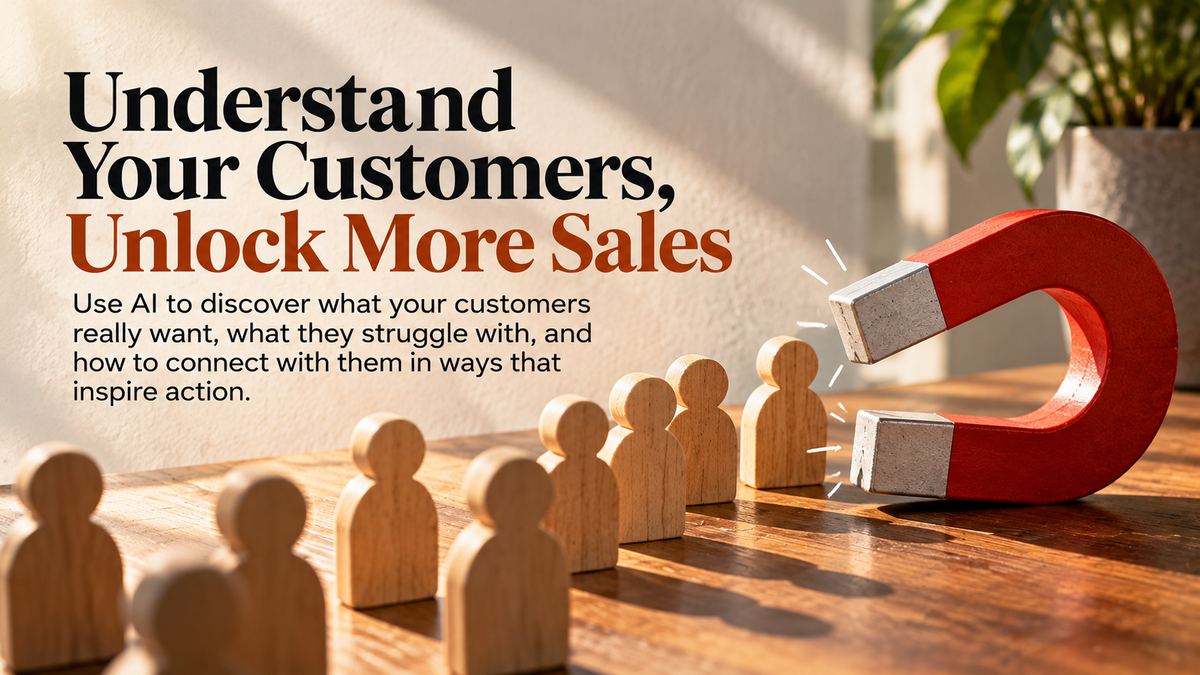
Use AI to discover what your customers really want, what they struggle with, and how to connect with them in ways that inspire action.
Some of the best marketing ever written reads like the customer wrote it themselves.
It uses their words. It names their worries. It describes exactly what they want, in the way they'd say it.
That doesn't come from clever writing. It comes from listening.
🗣️ MARKETING THAT SOUNDS LIKE YOUR CUSTOMER
Many marketing messages fail because they describe the business, not the customer.
"We offer high-quality, professional bookkeeping services." Every bookkeeper says that.
Compare it with: "Stop dreading tax season. We'll get your receipts sorted every month, so April is just another month." That speaks to a real worry in plain language.
The second version wasn't invented. It came from understanding what customers actually feel.
That understanding usually comes from what's called voice-of-customer research, which is collecting the exact words customers use to describe their problems and goals.
Good sources include:
Reviews, both of your business and of competitors.
Customer emails and messages, especially the first message someone sends you.
Sales calls and conversations, when people explain why they're looking for help.
Online communities where your customers discuss their problems.
Short surveys with open questions like "What almost stopped you from buying?"
🤖 LET AI SORT THE FEEDBACK
Collecting customer words is easy. Making sense of hundreds of them is the slow part. That's where AI shines.
Gather your material, with names and personal details removed, and ask an AI assistant to help you find the patterns:
"From these reviews, list the main problems customers had before buying, using their own words where possible."
"What outcomes do customers mention most when they're happy?"
"What doubts or worries come up before people buy?"
You'll end up with lists of real phrases, worries, and desired results.
Those become the raw material for headlines, emails, website copy, and ads that feel like they understand the reader.
📣 TURN CUSTOMER WORDS INTO BETTER MESSAGES
1. Collect exact phrases, not summaries "I was drowning in receipts" is more powerful than "customer had organization issues."
2. Pay attention to the worries Doubts before buying, like price, trust, or time, are what your marketing needs to answer.
3. Look at competitor reviews too Their unhappy customers tell you what the market wishes someone did better.
4. Test the language Try a customer phrase in an email subject line or post, and compare how it performs with your usual wording.
🚀 A SIMPLE WAY TO START
Gather 20 to 30 reviews or customer messages about your business or a competitor's.
Remove names and personal details, then ask an AI assistant to pull out the top three problems, top three desired outcomes, and top three doubts, using customers' own words.
Use one phrase from that list in your next post or email.
❯❯❯❯ Looking for tools that help you understand your audience faster? Discover options worth trying.
📌 NOTE
Use customer language to understand people, not to copy their reviews into your marketing. Don't quote a specific customer publicly without their permission, and never invent testimonials. Honest marketing builds trust that lasts.
KEY TAKEAWAY ⤵
Great marketing often starts with listening, not writing.
Collect real customer words, then use them to shape your next message.
The best words for your marketing are often already spoken by your customers.
- AI Business Builder